
Turn up the radio

Photo by Festive Tunes

As I previously stated in a past post, the radio was brought to the world by Guglielmo Marconi in 1896, that won him the Nobel Prize for Physics. This was honestly a really cool invention that allowed many people to listen to news, important information, gossip and folk stories. But Hans Christian Oersted was the first to proclaim, in 1820, that a magnetic field is created around a wire that has a current running through it. In 1830, English physicist Michael Faraday confirmed Oersted’s theory and established the principle of electromagnetic induction. Then Marconi’s invention came to be. Before, the radio was a means for sending Morse code through the air and this was the first practical use of radio.

In Barbados, a British company Radio Distribution Ltd. commenced a wired radio service in Barbados in 1934. In 1951 Rediffusion Ltd acquired Radio Distribution Ltd. In 1958 it moved from its location in Trafalgar Square to River Road. In 1953 Caribbean Broadcasting Corporation launched CBC Radio 900 AM. It was the first wireless radio station in Barbados. Soon after Voice of Barbados was brought to the ears of Barbadians on the radio station Gospel 790 AM.

There are different forms of radio such as terrestrial radio, community radio, internet radio and satellite radio.
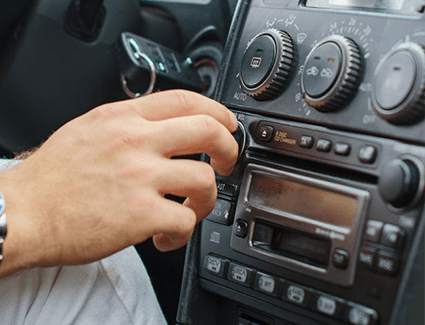
The Terrestrial Radio Stations in Barbados that I listen to are:

○ Hott 95.3 FM

○ The Beat 104.1 FM

○ Life 97.5 FM

● Caribbean Broadcasting Corporation ○ 98.1 The One

● CITA Radio 90.1 FM

● Capital Media HD 99.3

● SLAM 101.1 FM

The people who make these various radio stations run, is tied to how information goes from them to you. These brilliant people are Radio Announcers, Disc Jockeys (DJ), Traffic Manager, Programming Director, News Director/News Producer, Producers and Chief Engineer.

A radio announcer reads scripts that have been prepared for them. They introduce songs, occasional station breaks and radio shows. In some places, announcers sell commercial time to advertisers, write new scripts and commercials even run broadcasting equipment.

A disc jockey, also known as a DJ, plays music and makes music selections. Often times they manage contests and take requests from listeners through call-in programs. Disc jockeys are well known radio personalities and make promotional appearances and remote broadcasts for their particular stations. They also work with radio announcers.

Traffic managers have a lot to do within the radio station. They review the on-air time of sales orders and public-service announcements to ensure the completeness of data required for log. Traffic managers enter information, such as sponsor identity, date, maximum amount of time and frequency of commercials. They also enter information into the computer to compose, print and distribute a daily log to operations personnel and on-air talent. Traffic managers then review the daily log after use for authorized changes made during the broadcast.

A programming director (PD) is responsible for the programming content at more than one station. They work closely with talent and are involved in developing shows that promote the programming formats of the station.

The news director/news producer defines the journalistic standards for the station and manages the reporting staff at news/talk stations. In a small station, they may be a part of an on-air team, giving radio reports at scheduled news breaks.

An amazing producer is right behind every great radio personality. Producers work with DJs, announcers and program hosts to put a show on the air. They are responsible for bringing all the show’s elements together, including scripting, music, sound effects, guests, prizes and promotions.

Chief engineers have a direct responsibility for technical administration, staffing, maintenance and repair of broadcast systems and equipment. They also update technical credentials and have the ability to keep pace with the technological advancements are crucial to this job.

Some challenges the the radio industry is facing are mainlyIt’s sad a decline in listeners and the younger generation finding no interest in listening to radio.

With some threats to the radio industry our podcast portable devices that play audio and visual files and streaming services that offer subscription to on-demand service.

In researching about this medium of radio I have learned that it is a lot more complicated than people believe. Some people assume radio is just about people talking and reading things that they just so happened to be given through magic, but learning about the different people and jobs that are behind the scenes it is not that simple. The radio industry is interesting, and I might take up an interest in it and since the youth demographic is going down, I would definitely be tuning in more.

References

Radio on table https://www.sangean.com/en/

Car radio image https://www.captoyota.com/service/information/5-reasons-your-car-radio-stopped-working.htm

Newspapers

Photo by Roman Kraft

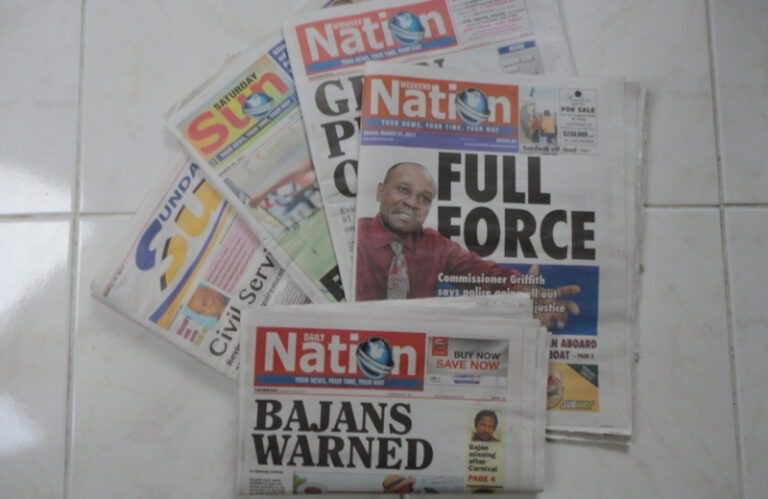
A newspaper is a printed publication (usually issued daily or weekly) consisting of folded, unstapled sheets and containing news, feature articles, advertisements, and correspondence. Newspapers have been brought to the world thanks to Gutenberg’s invention of the printing press in the year 1455.

But when it comes to Barbados, according to my knowledge, the very first newspaper was called, The Barbados Gazette. It was established in the year 1731 and the journalist that wrote the very first one and brought it to Barbados was named Samuel Keimer. There were many other newspaper outlets throughout the years. Some of them were Barbados Mercury, Bridgetown Gazette, Bajan Reporter, Barbados Underground, Caribbean News Agency, The Barbadian and many others.

The newspapers that are still active today are, Nation News, Barbados Advocate, Barbados Today and Loop. The people who are heads of different departments of the NationNews are Carol Martindale who is the editor, Adrian Bowen is the manager of circulation, Paulette Jones is the group head of advertising, and the editor of the Midweek Marion is Haydn Gill. Barbados Today is an online newspaper and releases a newspaper on weekdays only. Nothing is released on the weekend. The editor of this online paper is Dorian Bryan. The Barbados Advocate is similar to NationNews but Barbados Advocate is not as popular. Other people involved in the process of distributing newspapers are the journalists, photographers, cartoonists, page designers, clerks and delivery people.

Some challenges facing the newspaper industry include a general decline in reading culture, lack of interactivity, everything going digital, shorter attention spans, readers’ preference for free news, and the need to minimize the cost of production and distribution as well as provide timely updates.

Photo by Best-Barbados Vacation-Packages.com

As a young person who was born into the world where technology was first introduced, my attention span has become shortened. I have also noticed that certain newspapers’ costs are higher than others due to the amount of information given or put into them. I was told recently that the people who actually buy the newspapers and read them do not even read them completely. The main or top stories on the front and back page are read first, afterward the consumer reads select articles, features and editorials then put the paper away.

References

Barbados Museum & Historical Society

W3Newspapers https://www.w3newspapers.com/barbados

International Journal of Academic Research in Business and Social Sciences, 2021 https://papers.ssrn.com/sol3/papers.cfm?abstract_id=3914596#:~:text=The%20outcomes%20of%20this%20review,well%20as%20provide%20timely%20updates.

Newspapers image https://www.google.com/search?q=barbados+newspapers&tbm=isch&ved=2ahUKEwjf37rt0qaCAxVABGIAHdWFA5UQ2-cCegQIABAD&oq=barbados+newspapers&gs_lcp=ChJtb2JpbGUtZ3dzLXdpei1pbWcQAzIHCAAQGBCABDoECCMQJzoHCAAQigUQQzoHCCMQsAIQJzoHCAAQDRCABDoGCAAQBxAeOgQIHhAKOgUIABCiBFDjE1joImCcR2gAcAB4AIABogGIAckJkgEEMC4xMJgBAKABAcABAQ&sclient=mobile-gws-wiz-img&ei=qEhEZd_rJMCIiLMP1YuOqAk&bih=548&biw=375&client=safari&prmd=nibv&hl=en-us#imgrc=aocj5LNPXW-mQM

Person reading newspaper https://unsplash.com/photos/_Zua2hyvTBk

The Mass Media

The term mass media is defined as different multiple mediums or many ways to transmit information. Since mass medium is so broad, the history of mass media stretches from prehistoric art forms and writings to the hieroglyphics used by the Egyptians and others. But, we shall start at the invention of Gutenberg’s printing press in the year 1455. After that, the first weekly printed newspaper in Antwerp appeared in the year 1605. Next came the invention of radio by Guglielmo Marconi in 1896, that won him the Nobel Prize for Physics. While Italian innovator Antonio Meucci is credited with inventing the first basic phone in the year 1849, and Frenchman Charles Bourseul devised a phone in 1854, Alexander Graham Bell won the first U.S. patent for the device in 1876. Bell began his research in 1874 and had financial backers who gave him the best business plan for bringing it to market. A man by the name of John Logie Baird in the year 1925 invented television, which we all love watching. Up next came the internet (the World Wide Web) which was brought to us by Tim Berners Lee in the year 1990.

That is how Mass Media began around the world, but we’ll be focusing more on a little island that goes by the name of Barbados.

To my knowledge, the very first newspaper that was in Barbados was called, The Barbados Gazette. It was established in the year 1731.

The Barbados phone service dates back to the year 1884. Now, over 120 years later, it continues to be in forefront of the telecom sector. International Telecommunications Union (ITU) data showed that between the years 2000 and 2004, Barbados had 124 telephones for every 100 people on the island.

Radio was introduced a lot later, in the year 1963. The only station for a long time was The Caribbean Broadcasting Corporation which aired in 900 kHz (AM). Now it is aired on three stations, which are 94.7 FM, The One 98.1 FM and 100.7 FM.

In the year 1964, Barbados started its television service. The station was started with the aid of the TIE Ltd Consortium. Colour transmissions began sometime around 1980, using the NTSC colour broadcast system.

By 1982 fiber optic cables were introduced in Barbados, again a first for the Caribbean region. Cellular service came in 1991 and four years later 1995 the first Internet Service Providers sprung up.

References

Sehgal, S. (2019, January 21). The evolution of mass communication https://www.crises-control.com/blogs/the-evolution-of-mass-communication/#:~:text=The%20history%20of%20mass%20communication,1895%3B%20television%20by%20John%20Logie


Totally Barbados https://www.totallybarbados.com/articles/infrastructure/telecommunications/


Elon University https://www.elon.edu/u/imagining/time-capsule/150-years/back-1870-1940/#:~:text=The%20Development%20of%20the%20Telephone&text=While%20Italian%20innovator%20Antonio%20Meucci,for%20the%20device%20in%201876.